Jesus is not seeking publicity.
Jesus makes a quiet, private entrance at the feast. However, as Scripture repeatedly shows, a common response to conviction is not repentance but hatred and violence. In both Jesus’ earthly ministry and the work of Christianity, the world often responds to the gospel with persecution rather than submission.

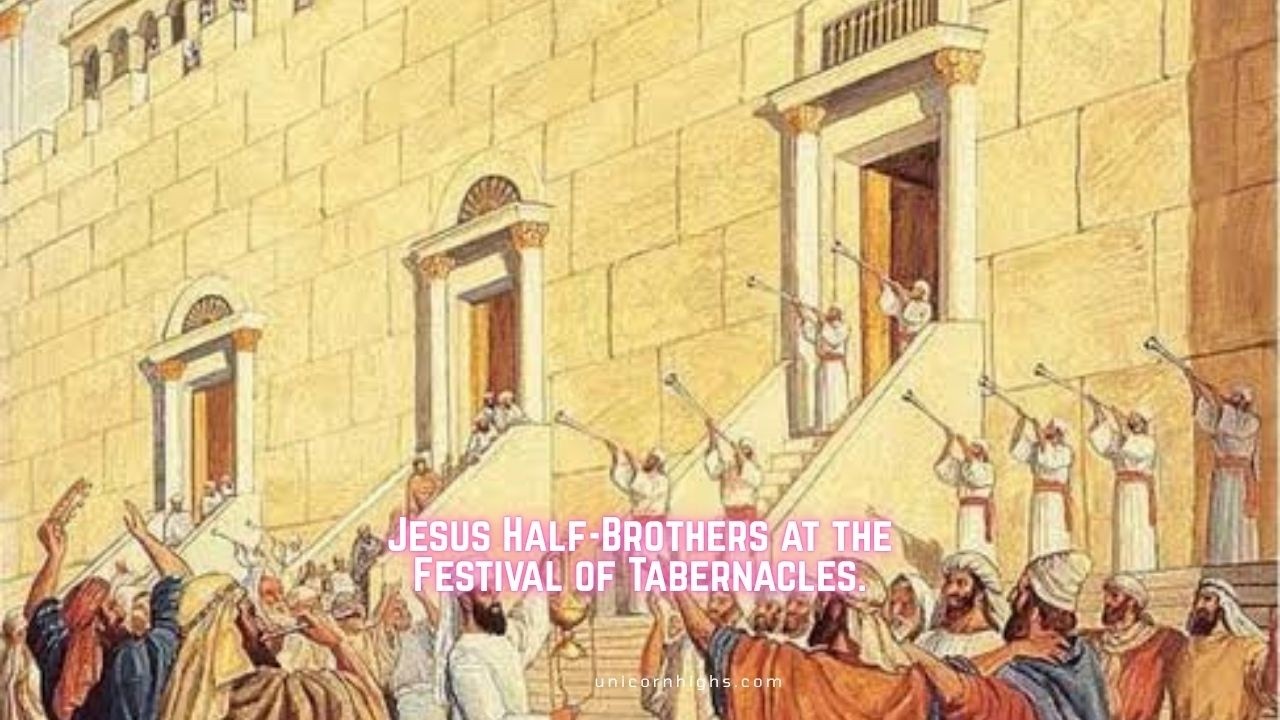
Jewish men were required to attend several feasts in Jerusalem each year (Deuteronomy 16:16). The most significant of these was the seven-day Feast of Booths, also known as the Festival of Tabernacles (Leviticus 23:34).
At this time of year, Jerusalem would have been swarming with pilgrims, visitors, and travellers. Instead of travelling to the feast with His brothers, Jesus intends to arrive alone, making a quieter entrance (John 7:10).
Despite the teasing from His siblings (John 7:1–5), Jesus is not seeking publicity or popularity (John 6:25–29). On the contrary, He knows His message will be opposed because people hate being reminded of their own sin (John 7:7; 15:24–25).
Jesus is also attuned to the will of God the Father and knows that His work on earth must align with God’s ultimate plan. As shown in later verses, Jesus attends the feast, though He does not begin to preach or teach until several days later (John 7:14).
For this reason, some manuscripts add a Greek word for “yet” to Jesus’ statement to His brothers: “I am not [yet] going up…” This is consistent with the context but unnecessary. Nor is it found in the older copies of Scripture. Jesus’ meaning is clear in both context and practice: “you go now, I am not.” After he had said this, he stayed in Galilee. John 7:9
Jesus avoided direct confrontation with the Jewish leaders at the feast.
In chapter 6, Jesus performed a dramatic feeding of the thousands (John 6:13–14), followed by a public debate in Capernaum (John 6:59). These high-profile events drew the attention of the religious leaders of Jerusalem, who had already condemned Jesus as a blasphemer (John 5:18).
To avoid direct conflict, Jesus had been staying in the region of Galilee rather than getting too close to Jerusalem (John 7:1). This area was close enough to Jerusalem for news to reach it, yet outside the immediate control of the scribes and Pharisees. However, as a Jewish man, Jesus was obliged to enter Jerusalem for the Feast of Booths (Deuteronomy 16:16).

His unbelieving siblings have been teasing Him about the loss of disciples described in the last chapter (John 6:66). With a hint of sarcasm, they suggest that if Jesus wants to put on a show, He should go to the feast and do just that: draw a crowd. Instead, Jesus tells them to go on ahead without Him (John 7:8).
Christ’s intent here is to honour God’s timeline (John 7:6) and to make a quiet private entrance. Several days into the festival, He will then begin preaching publicly again (John 7:14). However, after His brothers had left for the festival, He also went, not publicly, but in secret. Jesus will not perform miracles during this feast.
Jesus works to a divine timetable.
Jesus’ brothers—other children of His mother Mary—do not believe in His ministry at this point (John 7:5). Instead, they tease Jesus, suggesting He go to the festival to draw a crowd (John 7:3–4). Jesus responds by pointing out that He is working to a divine schedule, which they are not part of (John 7:6). He also notes that their attendance won’t be met with as much resistance as His (John 7:7–8).
So, Jesus tells His brothers to go ahead without Him, while He remains in Galilee (John 7:9). Later, as this verse shows, Jesus will make a quiet, private entrance. The Feast of Booths lasts an entire week, so Jesus’ eventual preaching in the temple does not occur until several days later (John 7:14).
These few days of anonymity would have given Jesus a chance to see and hear, first-hand, the rumours swirling through Jerusalem. The people are curious about Jesus and what He will do at the festival (John 7:11–13).

However, the gossip is spread in fear. “The Jews,” as the phrase is most often used in the Gospel of John, refers to the religious leaders of Jerusalem. These men have already marked Jesus as a blasphemer (John 5:18; 7:1).