Obedience must precede knowledge
Primarily, did Jesus have step-brothers or half-brothers? Given that the Jewish tradition held that the Messiah would be relatively unknown before His emergence, this belief underpins several ideas explored in the Gospel of John.
Later in this chapter, Jesus will emphasise that obedience must precede knowledge; otherwise, people will not believe (John 7:17). A year earlier, after healing a man at the Pool of Bethesda, Jesus noted that the men who rejected Him were well-versed in the Scriptures yet refused to believe (John 5:39–40).
Seeing miracles won’t convince those who aren’t seeking spiritual truth (Luke 16:31). Judas Iscariot is the prime example of someone who was presented with as much proof as possible yet still rejected Christ.
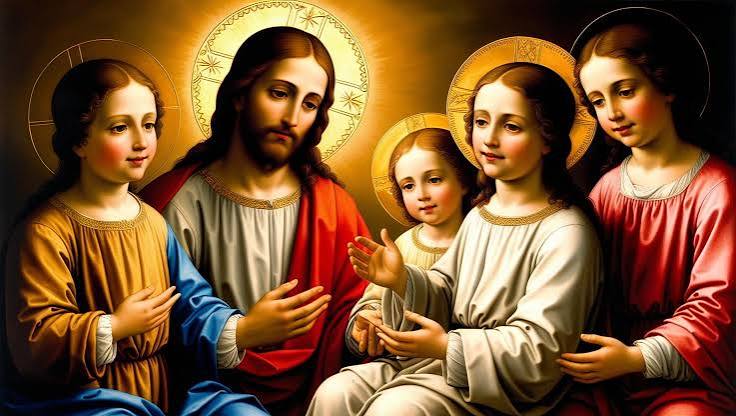
On a more positive note, tradition holds that at least two of Jesus’ siblings became believers after His resurrection. These include the authors of the New Testament books of James and Jude.
Although it does not specify the number, the Gospels also mention that Jesus had sisters (Matthew 13:56; Mark 6:3), using the plural “all his sisters.”
Indeed, the New Testament explicitly names four of Jesus’ brothers. In the Gospels of Matthew 13:55 and Mark 6:3, the townspeople of Nazareth name them during his ministry, thereby answering the question: did Jesus have step-brothers or half-brothers?
- James (Jacob): The most prominent brother, who later became the leader of the Jerusalem Church and is traditionally credited with writing the Epistle of James.
- Joseph (or Joses): Named after their father, Joseph, though very little is recorded about him in the New Testament.
- Simon: Mentioned only in these lists of siblings, with no additional biographical details in the Gospels.
- Judas (Jude): Traditionally regarded as the author of the Epistle of Jude, he introduces himself as “a servant of Jesus Christ and a brother of James”.
Did Jesus have step-brothers or half-brothers and why?
As we know, the feeding of the thousands in chapter 6 attracted considerable attention. These family members don’t yet believe that Jesus is the Messiah (John 7:5). This is probably a sarcastic response to the many followers who abandoned Jesus after His preaching in Capernaum (John 6:66), which occurred towards the beginning of the Festival of Booths.
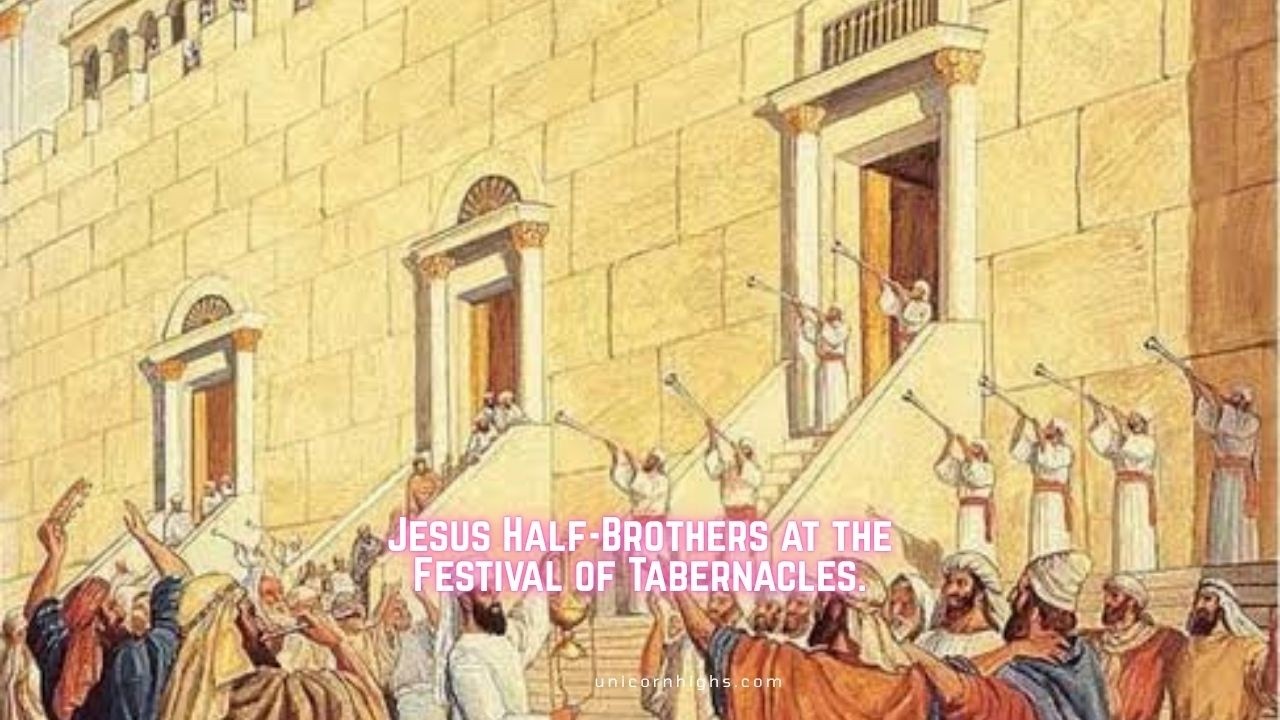
In John 7, Jesus’ half-brothers urged Him to attend the Festival of Tabernacles in Judea. They did not yet believe in Him and wanted Him to perform miracles publicly to make a name for Himself.
Jesus’ response to His brothers’ mockery offers an important perspective. Their teasing assumed that Jesus was merely seeking attention, so He should want to go out in public and put on a show.

However, Christ’s intent was not merely to draw a crowd; His goal was to explain the truth (John 6:25–29). For many, the truth conflicts with their preferences, prompting them to ignore the message (John 6:66). In addition, Jesus has been avoiding Jerusalem to delay the inevitable conflict with the Jewish religious leaders (John 7:1).
His time to be publicly proclaimed as Messiah is still in the future (John 12:12-15), as is His sacrificial death (John 19:18). Jesus’ brothers, on the other hand, are already fulfilling their purpose. In that sense, their “time had already come”. Jesus has greater concerns to keep in mind. In parallel, Jesus’ brothers did not face the same spiritual hostility as He did.
Did Jesus have step-brothers or half-brothers who didn’t believe in His ministry?
Jesus’ life and ministry focused on exposing the world’s sin and pointing to the need for a saviour (John 7:7). When, where, and how His brothers attended such festivals was unimportant. Christ, however, had to carefully consider how and when He presented Himself.
Jesus’ brothers are teasing Him about His public ministry and the sudden departure of many of His disciples (John 6:66). In their minds, Jesus ought to go to the Feast of Booths in Jerusalem in a grand style and perform more miracles to win back His following.
This shallow, teasing attitude stems from their lack of belief in Christ and His ministry (John 7:5). Not until after His resurrection will some of His siblings—James and Jude, at least two—become believers.
In the previous verse, Jesus referred to God’s timetable. In the future, He will openly declare Himself the Messiah (John 12:12–15). He will recognise that His ultimate purpose is about to be fulfilled (John 17:1). For now, however, He will act in accordance with God’s will rather than seek publicity, as His siblings want.
Jesus’ brothers have no such restrictions for two reasons. First, they are already living in “their time” and can move about the world with little consequence. Secondly, they do not face the spiritual resistance that Jesus encounters. Christ’s ministry confronts sin and hypocrisy.